
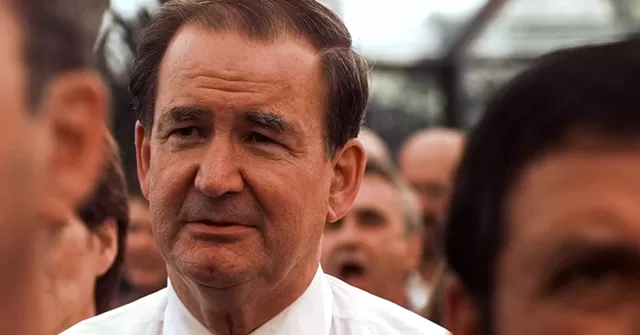
A recent working paper has raised some interesting questions about the current state of our country’s economy. Author Pat Buchanan, known for his warnings against unchecked globalization, proposes a scenario in which the United States adopts his trade policies sooner. This thought-provoking study has been making waves in the business world and has sparked a heated debate among economists.
According to Buchanan, the United States could have avoided many of the economic challenges it currently faces if only his warnings had been heeded. He argues that by prioritizing domestic production and protecting American businesses from foreign competition, we could have prevented a decline in manufacturing jobs, balanced trade deficits, and preserved our national industrial base.
The working paper, entitled “What if We Had Listened to Pat Buchanan?” dives into the potential outcomes of implementing Buchanan’s trade policies earlier on. It takes into account various factors such as trade agreements, tariffs, and subsidies to paint a comprehensive picture of what our economy could look like today.
One of the most significant findings of the study is that our country’s GDP would have likely been higher if Buchanan’s policies were implemented. This is something that cannot be ignored, especially considering the current economic challenges we are facing. It begs the question, could we have been better off if we had listened to Buchanan’s warnings?
This is a complex issue, and there are valid arguments on both sides. However, it is essential to consider the impact of globalization on our country’s economy. While it has certainly brought many benefits such as increased access to goods and services, it has also disrupted industries and contributed to job losses. Buchanan’s policies aim to balance the scales and protect American businesses and workers from the negative effects of globalization.
One of the most significant concerns Buchanan has raised is the decline in manufacturing jobs in the United States. The country has lost more than 5 million manufacturing jobs since 2000, and this trend continues to this day. The working paper suggests that if we had adopted Buchanan’s policies, we could have saved many of these jobs and preserved our national industrial base. This could have had a significant impact on our country’s unemployment rate and the overall well-being of our economy.
In addition to protecting domestic industries, Buchanan’s policies also prioritize fair trade. This means implementing tariffs and subsidies to ensure a more level playing field for American businesses when competing with foreign companies. This is especially crucial for industries that are vital to our national security, such as steel and technology.
Critics of Buchanan may argue that these policies would lead to increased prices for goods and services, but the working paper suggests otherwise. By balancing trade deficits and promoting domestic production, there would be a decrease in the cost of living, benefiting the average American.
Moreover, the working paper highlights that adopting Buchanan’s policies could have prevented the rise of China as a global economic power. By taking a stronger stance against China’s unfair trade practices earlier on, the United States may have been able to maintain its economic dominance. This could have also affected the current trade war between the two countries, which has had a significant impact on the global economy.
Of course, it is impossible to predict the exact outcomes of implementing Buchanan’s policies. However, the working paper has ignited an essential conversation about the current state of the economy and the role of globalization. It forces us to consider the potential benefits of prioritizing domestic production and protecting American businesses from foreign competition.
In conclusion, the working paper “What if We Had Listened to Pat Buchanan?” is a thought-provoking piece that raises valid questions about the impact of globalization on our economy. It is essential to consider the potential outcomes of adopting Buchanan’s policies and whether they could have prevented the economic challenges we face today. While we cannot change the past, this study serves as a valuable lesson for the future. Let us listen to all perspectives and work towards finding the best solutions for our country’s economy.