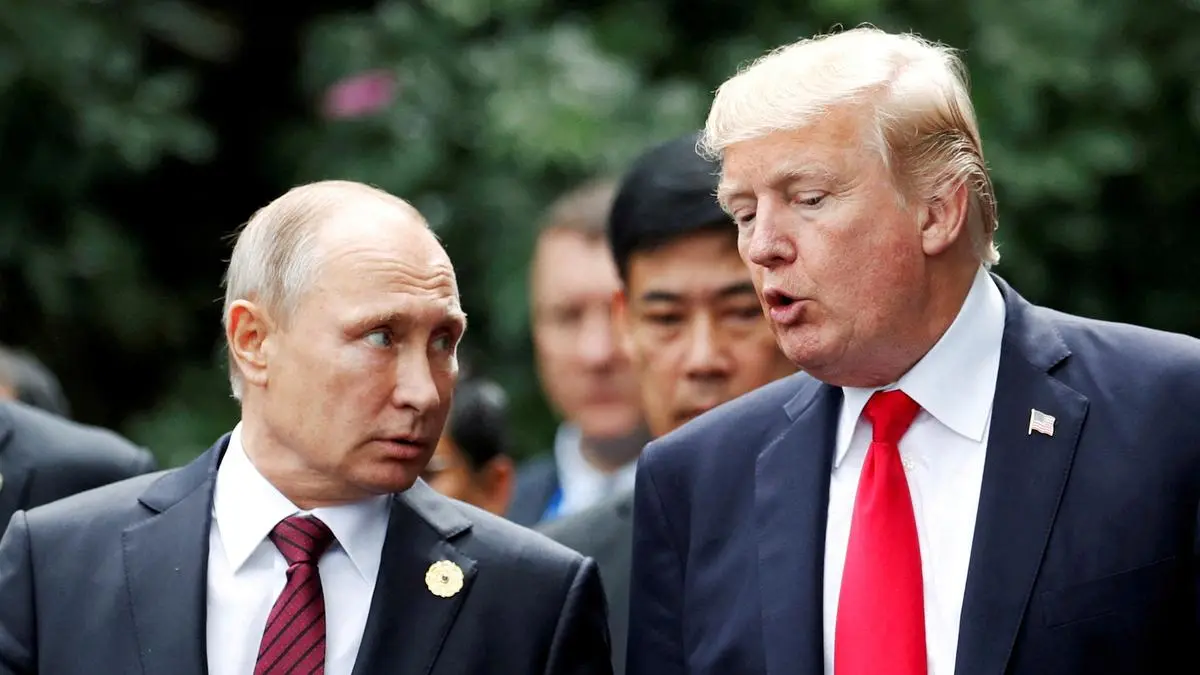
In a recent meeting with Ukrainian President, Volodymyr Zelensky, US President Donald Trump suggested a possible “territory swap” between Russia and Ukraine. This proposal raised concerns among European leaders, who fear it may sideline Ukraine and threaten its territorial integrity.
The meeting between the two Presidents took place on the sidelines of the United Nations General Assembly in New York. Trump raised the idea of a territory swap as part of a larger deal to resolve the ongoing conflict in Eastern Ukraine. The conflict, which began in 2014, has resulted in the annexation of Crimea by Russia and ongoing fighting in the Donbas region.
Trump’s proposal would involve handing over the Crimean peninsula to Russia and recognizing it as part of their territory, in exchange for Ukraine regaining control over the Donbas region. This would effectively redraw the borders between the two countries and ease tensions between them.
The idea of a territory swap has been met with widespread backlash from European leaders. They fear that such a deal would not only sideline Ukraine, but also undermine the international law and agreements that have been in place since the end of World War II.
Ukrainian Foreign Minister, Vadym Prystaiko, expressed his disappointment and concern over the proposal, stating that Ukraine is not ready to give up its territory. He emphasized that Crimea and Donbas are an integral part of Ukraine and their return is non-negotiable.
European Union officials have also voiced their disapproval of the proposal, with European Council President, Donald Tusk, calling it “dangerous” and stating that it would be seen as a sign of appeasement towards Russia.
This proposed territory swap has caused further strain on the already complicated relationship between the US and Europe. It also highlights the diverging opinions on how to handle the conflict in Ukraine, with the US taking a more pro-Russia stance.
It is not the first time Trump has suggested a similar deal, having proposed it during his first meeting with Russian President Vladimir Putin in 2018. However, this time it has caused more alarm among European leaders, who have been working towards finding a peaceful resolution to the conflict in Ukraine.
What is even more concerning is the fact that the proposal came just weeks after the US Congress approved a $250 million military aid package to Ukraine. This aid was meant to help Ukraine defend its sovereignty and territorial integrity against Russian aggression. The proposal of a territory swap now raises questions about the US commitment to Ukraine’s security and stability.
The idea of a territory swap also opens up a Pandora’s box of potential consequences. It could set a dangerous precedent for other countries with territorial disputes. It could also embolden Russia to continue its aggressive behavior towards its neighboring countries, knowing that they can still negotiate a favorable deal with the US.
Moreover, the proposal ignores the fact that the annexation of Crimea by Russia was a blatant violation of international law and the sovereignty of Ukraine. Giving in to Russia’s demands would not only reward their illegal actions but also set a dangerous precedent for future conflicts.
It is important for the US to understand that any deal that undermines Ukraine’s sovereignty and territorial integrity will only further escalate tensions in the region. The international community must stand united in supporting Ukraine and finding a peaceful resolution to the conflict, in line with international law and previous agreements.
In the face of this proposal, it is essential for European leaders to reaffirm their commitment to Ukraine’s sovereignty and territorial integrity. They must also continue to work with the US and other international partners to find a diplomatic solution to the conflict in Eastern Ukraine.
In conclusion, Trump’s suggestion of a territory swap between Russia and Ukraine has caused alarm and concern among European leaders. It not only undermines Ukraine’s sovereignty and territorial integrity but also sets a dangerous precedent for future conflicts. The international community must come together to find a peaceful resolution to the conflict, without compromising on international law and agreements. Ukraine’s sovereignty and territorial integrity must be respected and protected, and any deal that goes against this must be rejected.