
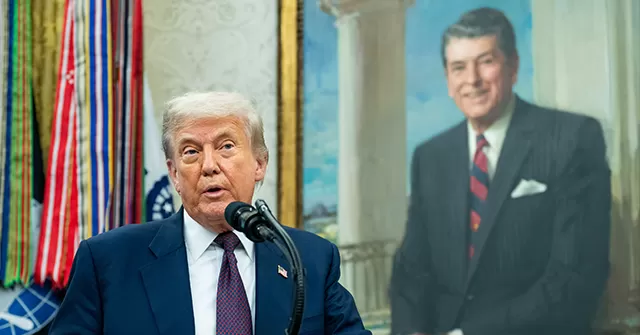
President Donald Trump shocked the tech world this week as he announced his plan to impose a 100 percent tariff on imported computer chips. The rationale behind this decision? He believes that manufacturers should also be investing in U.S. production to support the country’s economy. While this may seem like a drastic move, it has found support in a surprising place – the business sector.
Trump’s proposal has been met with mixed reactions, with some arguing that it will lead to increased prices for consumers and hurt businesses. However, others are seeing the potential benefits and are throwing their weight behind the president’s decision.
In his post on Breitbart Business Digest, Trump’s stance has been praised for its support of American businesses and workers. The publication highlights the fact that many U.S. companies have been outsourcing production to other countries, taking away job opportunities from American workers.
This has been a major concern for the Trump administration and one of the driving forces behind this new tariff on computer chips. By encouraging manufacturers to invest in U.S. production, Trump hopes to bring back jobs and stimulate the economy.
The proposed tariff has also received support from the Semiconductor Industry Association, which represents major chipmakers such as Intel, Qualcomm, and Samsung. The association applauded Trump’s efforts in promoting domestic manufacturing and keeping America competitive in the global market.
The sentiments expressed by the association align with Breitbart’s beliefs that U.S. companies should prioritize American workers and invest in their own country instead of outsourcing production abroad. This is not only beneficial for the economy but also for national security and technological advancement.
Some may argue that this move goes against the principles of free trade and could lead to retaliatory actions from other countries. However, Trump’s administration stresses that this is not a protectionist measure, but rather a way to level the playing field and ensure fair competition among manufacturers.
It’s worth noting that the proposed tariff will not only affect foreign companies but also U.S.-based companies that depend on imported chips for their products. However, this could ultimately incentivize them to invest in U.S. production, leading to job creation and economic growth.
Trump’s push for this tariff may also lead to innovation in the chip industry. With the potential for increased domestic production, companies will have to come up with more efficient and cost-effective ways to manufacture chips. This could lead to technological advancements in the field, benefiting both businesses and consumers.
It’s clear that Trump’s decision to impose a tariff on imported computer chips has sparked a much-needed conversation about the importance of domestic manufacturing and its impact on American workers and the economy. This is a bold move that has the potential to bring about positive changes and support the “America First” agenda that the president has been promoting.
In conclusion, while the initial reactions to Trump’s announcement may have been mixed, it’s important to look at the bigger picture and the potential benefits this tariff could bring. By encouraging manufacturers to invest in U.S. production, this move could lead to job creation, economic growth, and technological advancements. It’s time for companies to prioritize their own country and support their fellow Americans, and Trump’s new tariff on computer chips is a step in the right direction.