
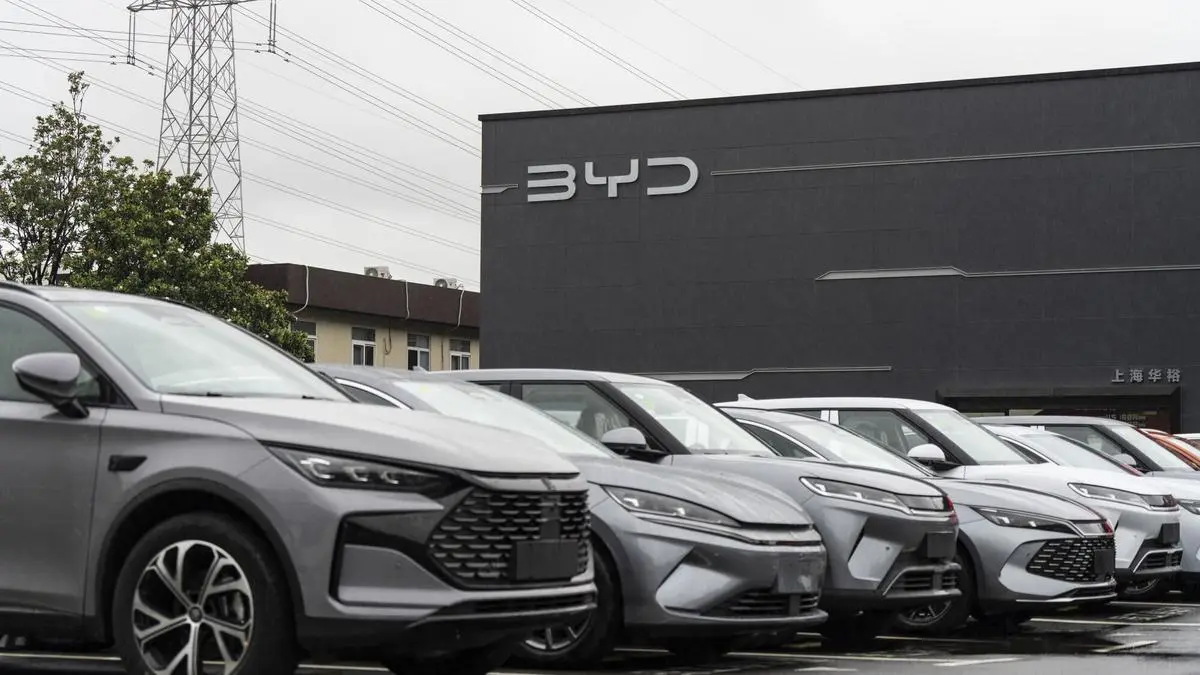
With the rise of electric vehicle (EV) demand globally, Chinese automaker BYD has set an ambitious goal to sell 5.5 million units this year. However, the company may face challenges in achieving this target as Chinese authorities have intensified their scrutiny on the country’s auto sector. In an effort to regulate the industry and promote fair competition, authorities have pledged to crack down on heavy discounts that have fueled a price war.
BYD, also known as Build Your Dreams, has been a leader in the EV market with its affordable and high-quality vehicles. In recent years, the company has seen a significant increase in demand for its EV models, both locally and internationally. In 2020, BYD managed to sell 426,972 EVs, making it the top-selling EV manufacturer in China and the second-best globally behind Tesla.
Despite its success, BYD now faces headwinds in hitting its annual goal due to the changing regulatory environment in China. The country’s auto market is highly competitive, and a price war has been ongoing for years, with automakers offering heavy discounts to attract consumers. However, this has resulted in significant profit losses for companies and has led to concerns of a bubble in the market.
In February of this year, China’s Ministry of Industry and Information Technology (MIIT) announced that it would be cracking down on the practice of offering excessive discounts, labeling it as “vicious competition.” This means that companies like BYD will have to adjust their pricing strategies, which could impact their sales targets.
Moreover, the Chinese government has also implemented new regulations that require automakers to obtain a new production license if they want to produce more than 10,000 EVs per year. This new policy is a way to control the number of EV manufacturers and ensure the quality of the vehicles. While BYD holds the necessary licenses, it may be challenging for smaller EV startups to obtain them and enter the market, limiting competition for established companies like BYD.
Despite these challenges, BYD remains optimistic and is determined to meet its annual sales goal. The company has already made significant efforts to adjust its pricing strategies in accordance with the new policies. In March, BYD raised the prices of its EV models, citing the increasing cost of raw materials and the need for sustainable development.
Moreover, the company has been actively expanding its production capacity to meet the rising demand for EVs. In March, BYD opened its third EV factory in China, which has an annual production capacity of 400,000 units. The company also plans to open a new factory in Brazil and expand its production in Europe. Such expandion efforts will enable BYD to increase its production to meet the 5.5 million-unit goal.
Furthermore, BYD is continuously working on new EV models to add to its product lineup, which will help attract more customers and stay competitive in the market. This year, the company plans to release several new models, including a flagship luxury electric sedan and an electric SUV.
In addition to its efforts in the EV market, BYD has also been diversifying its business. The company has recently ventured into the renewable energy sector, producing solar panels and energy storage systems. This move not only helps BYD reduce its reliance on EV sales but also aligns with the Chinese government’s focus on clean energy and sustainability.
In conclusion, while BYD faces headwinds in hitting its annual sales goal, the company remains committed to achieving it. With its strong brand reputation, expanding production capacity, and efforts to adjust to the changing regulatory environment, BYD is in a favorable position to meet its target. The company’s continuous innovation and diversification efforts also indicate its long-term vision and determination to remain a leader in the EV market.