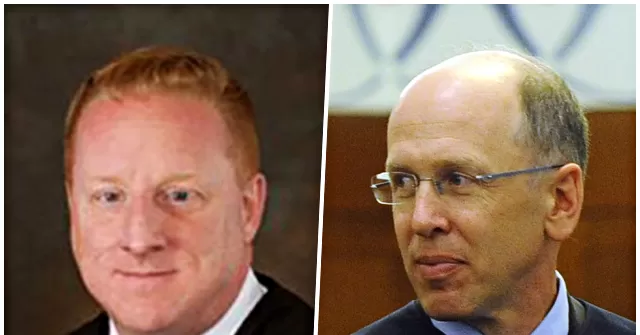
President Donald Trump’s executive order to end birthright citizenship for the United States-born children of illegal aliens has been met with strong opposition from federal judges. This controversial move, which was announced just weeks before the midterm elections, has sparked a heated debate about immigration and the rights of children born in the United States.
The executive order, if implemented, would have changed the interpretation of the 14th Amendment of the US Constitution, which grants citizenship to anyone born on American soil. This would have meant that children born to undocumented immigrants in the United States would no longer be automatically granted citizenship, a move that has been heavily criticized by many.
However, thanks to the swift action of federal judges, this executive order has been temporarily blocked. This decision has been met with relief and gratitude by many, who see it as a victory for the rights of all children born in the United States, regardless of their parents’ immigration status.
The 14th Amendment was added to the US Constitution in 1868, in the aftermath of the Civil War, to ensure that all people born in the United States would be granted citizenship and equal protection under the law. This amendment has been a cornerstone of American democracy and has been upheld by numerous court decisions over the years.
President Trump’s executive order to end birthright citizenship has been met with criticism from both sides of the political spectrum. Many have argued that it goes against the very principles of the United States and would create a state of uncertainty and fear for millions of families. Others have pointed out that such a move would require a constitutional amendment, and cannot be achieved through executive order.
The decision of federal judges to block this executive order is a testament to the strength and resilience of the American justice system. It serves as a reminder that no one, not even the President, is above the law and that the rights of all individuals, regardless of their background, must be protected.
The United States has always been a nation of immigrants, and the contributions of immigrants have played a crucial role in shaping the country into what it is today. The idea of ending birthright citizenship for the children of undocumented immigrants goes against the very values that America stands for – equality, opportunity, and freedom.
Furthermore, ending birthright citizenship would have far-reaching consequences, not just for the children of undocumented immigrants, but for all children born in the United States. It would create a two-tiered system of citizenship, where some are born with rights and others are not. This goes against the very foundation of the United States as a nation built on the principles of equality and justice for all.
The decision of federal judges to block this executive order is a victory for the rights of all children born in the United States. It sends a powerful message that the United States will not stand for discrimination and that all individuals, regardless of their background, are entitled to the same rights and opportunities.
In the midst of a heated political climate, it is heartening to see that the American justice system is still able to uphold the values and principles that this country was founded upon. The decision of federal judges to block this executive order is a reminder that the United States is a country of laws, and that these laws must be respected and upheld.
In conclusion, President Trump’s executive order to end birthright citizenship for the children of undocumented immigrants has been met with strong opposition from federal judges. This decision serves as a reminder that the United States is a country built on the principles of equality and justice for all, and that no one, not even the President, is above the law. It is a victory for the rights of all children born in the United States, and a reaffirmation of the values that make America a beacon of hope and opportunity for people around the world.