President Donald Trump has once again made headlines with his recent criticism of an Obama-appointed judge overseeing Harvard’s legal challenge to the administration’s decision to freeze $2.2 billion in federal grants to the university. In a recent tweet, Trump blasted the judge for his handling of the case, sparking a heated debate among supporters and critics alike.
The controversy began when Harvard University filed a lawsuit against the Trump administration, challenging their decision to withhold federal funding for the university’s research projects. The administration had frozen the grants, citing concerns over the university’s use of race in their admissions process. This move was met with strong opposition from Harvard, who argued that the decision was politically motivated and would have a detrimental impact on their research and academic programs.
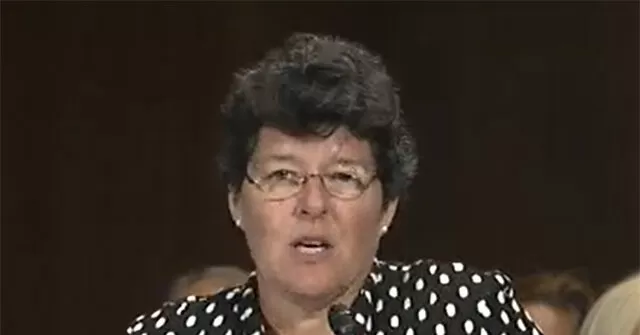
As the legal battle unfolded, it was assigned to U.S. District Court Judge Allison Burroughs, who was appointed by former President Barack Obama in 2014. This fact did not sit well with President Trump, who took to Twitter to express his disapproval of the judge’s involvement in the case. In his tweet, Trump accused Burroughs of being biased and questioned her ability to make an impartial decision.
This outburst from the President has sparked a heated debate, with many questioning the appropriateness of his comments towards a sitting judge. Some have accused Trump of trying to influence the outcome of the case, while others have defended his right to express his opinion on the matter.
However, regardless of one’s political stance, it is important to focus on the facts of the case and the implications of the administration’s decision to freeze funding for Harvard. The university is one of the most prestigious and renowned institutions in the world, known for its groundbreaking research and academic excellence. The grants in question are crucial for the university’s ongoing research projects, which have the potential to make significant contributions to various fields of study.
By freezing these grants, the Trump administration is not only jeopardizing the future of these research projects but also hindering the progress of the academic community as a whole. This decision sends a message that the government is willing to put politics above the advancement of knowledge and innovation, which is a dangerous precedent to set.
Furthermore, the administration’s decision to target Harvard specifically raises concerns about their motives. Harvard has a long history of promoting diversity and inclusion, and their use of race in the admissions process is a reflection of their commitment to creating a diverse and inclusive campus. By targeting Harvard, the administration is sending a message that they do not support these values, which is deeply concerning.
It is also worth noting that this is not the first time the Trump administration has targeted higher education institutions. In the past, they have proposed budget cuts to programs that support students from low-income families and have rolled back protections for transgender students. These actions have raised concerns about the administration’s commitment to promoting equal opportunities in education.
In light of these developments, it is crucial for the judiciary to uphold the principles of fairness and impartiality in their decision-making process. Judge Burroughs, as a respected member of the judiciary, has a responsibility to ensure that justice is served in this case. Her appointment by President Obama should not be used as a means to discredit her or question her ability to make an unbiased decision.
In conclusion, President Trump’s criticism of the Obama-appointed judge overseeing Harvard’s funding case is concerning and raises questions about the administration’s motives. It is important for the judiciary to remain independent and make decisions based on facts and evidence, rather than political affiliations. The outcome of this case will have far-reaching implications, not just for Harvard but for the future of higher education in the United States. Let us hope that justice prevails and that the administration’s decision to freeze funding for Harvard is overturned.