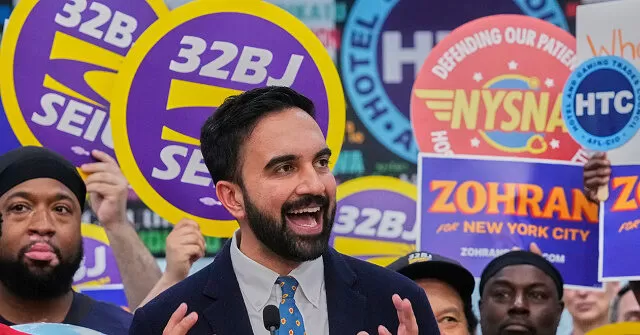
Zohran Mamdani, a self-proclaimed socialist and candidate for New York City mayor, is facing backlash for advocating for the “abolition of private property” in a recently resurfaced video. The video, which has been circulating on social media, shows Mamdani passionately speaking about the need to dismantle the current system of private property ownership in order to achieve true equality and justice.
In the video, Mamdani can be seen addressing a crowd, stating, “We need to abolish private property. We need to take back what is rightfully ours and redistribute it to those who have been oppressed for far too long.” These words have sparked controversy and criticism from those who believe in the importance of private property rights.
Mamdani’s opponents have seized on this video, using it to paint him as a radical and out-of-touch candidate. They argue that his views on private property are extreme and would lead to chaos and economic instability. However, Mamdani’s supporters argue that his stance on private property is rooted in a deep understanding of the systemic inequalities that exist in our society.
For Mamdani, the issue of private property is not just about physical possessions, but also about the power dynamics that come with it. He believes that the current system of private property ownership perpetuates a cycle of oppression and marginalization, where the wealthy few hold all the power and resources while the rest struggle to survive.
In an interview with The New York Times, Mamdani explained, “Private property is not just about owning a home or a car. It’s about owning the means of production, the land, the resources. And when a small group of people hold all of that, it creates a system where the majority are left behind.”
Mamdani’s call for the abolition of private property is not a new concept. It has been advocated by many socialist and communist thinkers throughout history, who argue that true equality and justice can only be achieved by eliminating the concept of private ownership altogether.
However, Mamdani’s critics argue that this approach is unrealistic and would lead to economic disaster. They point to examples of failed socialist and communist regimes where the abolition of private property resulted in widespread poverty and government control over all aspects of life.
But Mamdani is not advocating for a complete overhaul of the system overnight. He believes in a gradual transition towards a more equitable society, where the concept of private property is redefined and redistributed in a way that benefits the majority.
Mamdani’s campaign platform includes policies such as a universal basic income, affordable housing, and a progressive tax system, which aim to address the wealth gap and provide equal opportunities for all New Yorkers. He also advocates for community land trusts, where land is owned collectively and used for the benefit of the community.
Despite the criticism and backlash, Mamdani remains steadfast in his beliefs and continues to push for a more just and equal society. He believes that the current system of private property ownership is not sustainable and that it is time for a change.
In a statement to the media, Mamdani said, “We cannot continue to ignore the deep-rooted inequalities that exist in our society. The current system of private property only benefits a select few, while the rest are left struggling. It is time for us to have a serious conversation about how we can create a more equitable and just society for all.”
Mamdani’s call for the abolition of private property may seem radical to some, but it is a reflection of the growing discontent with the current economic system. As the income gap continues to widen and social injustices persist, more and more people are turning to alternative solutions, such as Mamdani’s, in the hopes of creating a better future for all.
In the end, whether or not Mamdani’s views on private property will resonate with New Yorkers remains to be seen. But one thing is for sure, his bold stance on this controversial issue has sparked an important conversation about the role of private property in our society and the need for change.