
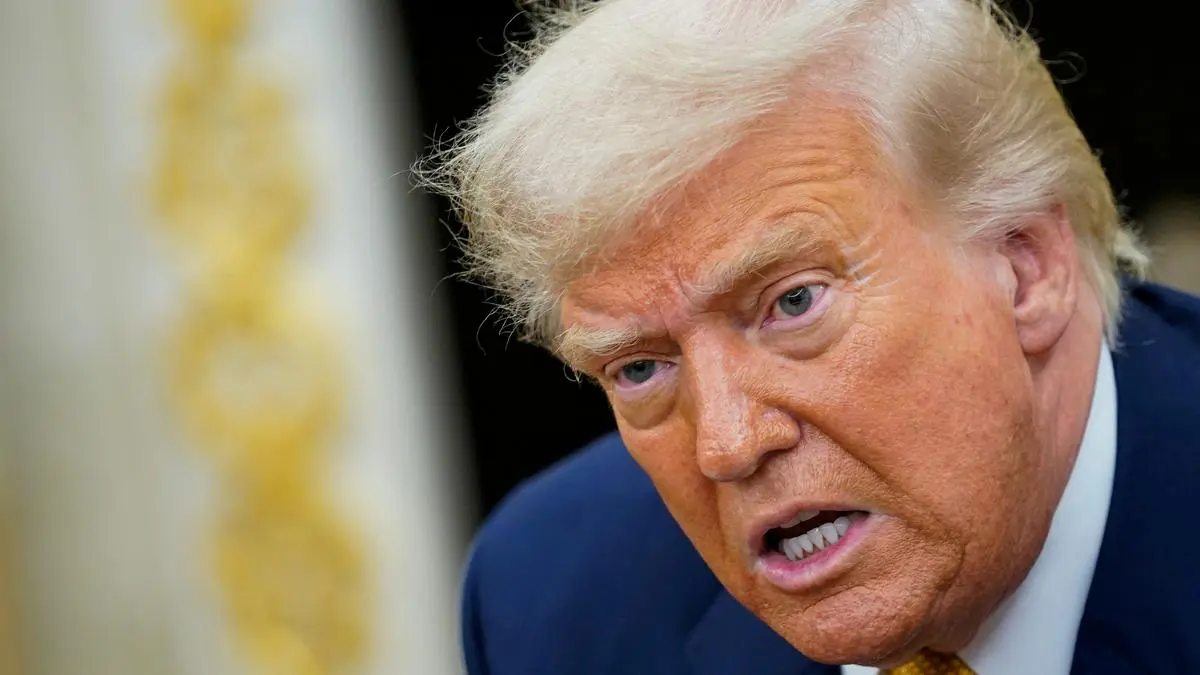
In a recent statement, President Donald Trump announced his plans to impose a 10% to 15% tariff on smaller countries in order to protect American economic interests. This decision has sparked a lot of debate and controversy, with some praising it as a necessary step to safeguard the American economy, while others criticize it as a protectionist move that could harm global trade.
During a press conference at the White House, President Trump stated that the United States has been taken advantage of by smaller countries for far too long. He argued that these countries have been able to freely export their goods to the US without facing any significant tariffs, while American companies have been facing high tariffs and other trade barriers when trying to export to these same countries.
The President also pointed out that this tariff would only apply to smaller countries, not to major trading partners like China or the European Union. He emphasized that this move is not meant to start a trade war, but rather to level the playing field and protect American businesses and workers.
This decision has been met with mixed reactions from both domestic and international leaders. Some have praised President Trump for taking a strong stance on protecting American interests, while others have expressed concern over the potential negative impact on global trade and relationships with smaller countries.
Supporters of the tariff argue that it is a necessary step to protect American jobs and industries. They argue that by imposing tariffs on smaller countries, the US will be able to negotiate better trade deals and ensure that American companies are not at a disadvantage when it comes to exporting their goods. They also believe that this move will encourage smaller countries to lower their own tariffs and trade barriers, creating a more fair and balanced global trade system.
On the other hand, critics of the tariff argue that it could lead to a trade war and harm the global economy. They argue that imposing tariffs on smaller countries could result in retaliatory measures, leading to a cycle of increasing tariffs and ultimately hurting all countries involved. They also point out that this move goes against the principles of free trade and could damage relationships with smaller countries, potentially leading to political and diplomatic consequences.
Despite the differing opinions, one thing is clear – President Trump’s decision to impose tariffs on smaller countries is a bold move that could have significant implications for the global economy. It remains to be seen how this decision will play out and what the long-term effects will be.
In the meantime, it is important for all parties involved to approach this situation with caution and open-mindedness. It is crucial to find a balance between protecting American interests and maintaining positive relationships with smaller countries. Negotiations and discussions should continue in order to find a solution that benefits all parties involved.
In conclusion, President Trump’s announcement of a 10% to 15% tariff on smaller countries has sparked a lot of debate and controversy. While some see it as a necessary step to protect American economic interests, others are concerned about the potential negative impact on global trade. It is important for all parties to approach this situation with an open mind and work towards finding a solution that benefits everyone. Only time will tell how this decision will ultimately affect the global economy, but one thing is for sure – it is a decision that will have a significant impact on the future of international trade.