Today, The National Archives is launching an innovative new workshop for students who are blind and visually impaired. This workshop utilizes a groundbreaking technique called optacartography, which transforms traditional, flat documents into tactile, three-dimensional models. This exciting new workshop will allow students with visual impairments to explore and interact with historic documents from The National Archives’ extensive collection in a whole new way.
The workshop includes three-dimensional versions of significant documents from various periods in history. These include a remarkable medieval map and a rare wage slip for Tudor courtier John Blanke. These tactile models have been meticulously created using state-of-the-art technology and are faithful representations of the original documents. This workshop is a groundbreaking step towards making historical documents more accessible and inclusive for all students.
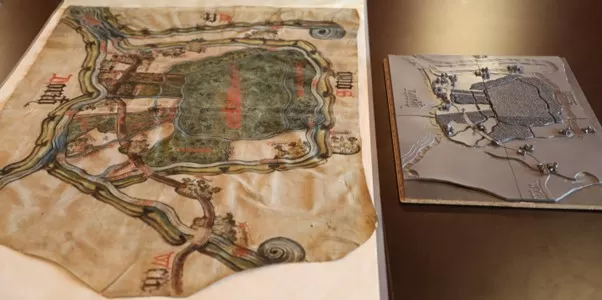
The optacartography technique involves the use of specialized software and printing techniques to create three-dimensional, tactile models of documents. These models provide a unique opportunity for students with visual impairments to experience the documents in a way that is both engaging and informative. The intricate details of the documents, such as the layout, handwriting, and illustrations, are brought to life in these models, making it easier for students to understand and appreciate the historical significance of the documents.
The National Archives has always been committed to ensuring that its vast collection of historic documents is accessible to everyone. With this new workshop, the organization is taking a significant step towards making its resources more inclusive. It is a testament to the organization’s dedication to promoting the understanding and appreciation of history for everyone, regardless of their physical abilities.
The workshop is aimed at students of all ages, from primary school to university. It is designed to be both educational and fun, providing students with the opportunity to learn through hands-on exploration. The three-dimensional models will allow students to touch and feel the documents, gaining a deeper understanding of their content and context.
One of the standout documents featured in the workshop is a medieval map dating back to the 13th century. This map has been recreated in meticulous detail, allowing students to feel the intricate contours and features of the landscape. This is a rare opportunity for students to get a tactile sense of how maps were created and used in ancient times, providing valuable insights into the medieval world and its geography.
Another fascinating document included in the workshop is a wage slip for John Blanke, a prominent black musician in the court of King Henry VIII during the Tudor period. This document provides a glimpse into the life of an African man living in England during a time when racial diversity was not the norm. The three-dimensional model of this document will allow students to experience the unique handwriting and signature of John Blanke, making it a truly immersive and educational experience.
The National Archives is delighted to be able to offer this workshop to students who are blind and visually impaired. This initiative is part of the organization’s ongoing efforts to make history more accessible and engaging for all. The workshop will undoubtedly inspire a new generation of students to explore and appreciate our rich historical heritage.
The launch of this workshop also highlights the importance of inclusive education and the need for educational institutions to cater to the diverse needs of their students. By providing alternative methods of learning, such as the optacartography technique, we can pave the way for a more inclusive and diverse education system.
In conclusion, the new optacartography workshop at The National Archives is a groundbreaking initiative that promises to make history more accessible and engaging for students who are blind and visually impaired. The three-dimensional models of historic documents are not only informative but also serve as a source of inspiration for students to delve deeper into the fascinating world of history. This workshop is a testament to the organization’s commitment to promoting inclusivity, accessibility, and historical education for all. We applaud The National Archives for taking this bold step and look forward to seeing the positive impact this workshop will have on students’ lives.