
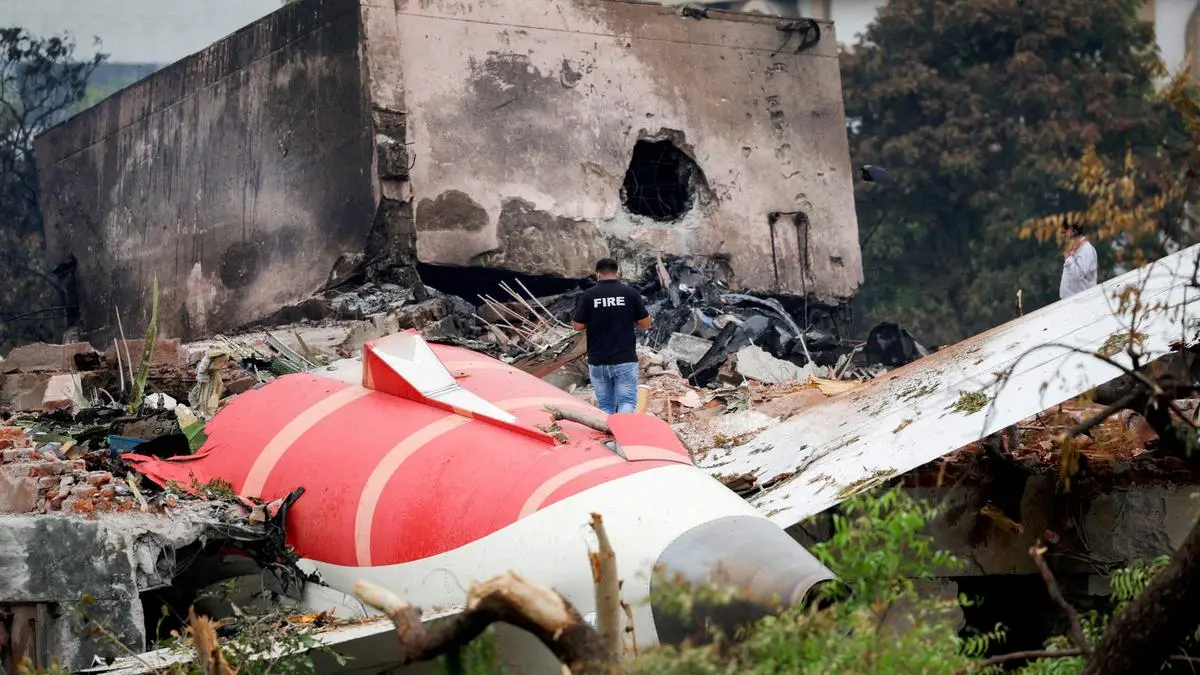
The Boeing 787 Dreamliner, the most advanced aircraft in the world, has been the talk of the aviation industry since its launch in 2011. With its futuristic design and cutting-edge technology, it has been a dream come true for both passengers and pilots. However, on a fateful day, this dream turned into a nightmare when a London-bound Dreamliner crashed moments after takeoff from Ahmedabad, claiming the lives of 241 people on board and on the ground.
The flight, which was scheduled to depart from Ahmedabad’s Sardar Vallabhbhai Patel International Airport at 6:30 am, was carrying 235 passengers and 7 crew members. The passengers were a mix of business and leisure travelers, all excited to board the state-of-the-art Dreamliner for their journey to London. Little did they know that it would be their last flight.
According to eyewitnesses, the Dreamliner started losing height after reaching an altitude of 650 feet. Panic and chaos ensued as passengers and crew members realized something was wrong. The pilots tried to regain control of the aircraft, but their efforts were in vain. Within minutes, the Dreamliner crashed into a nearby residential area, taking the lives of 241 people on board and the rest on the ground.
The news of the crash sent shockwaves throughout the world. The aviation community was left in disbelief, and questions started to arise about the safety of the Dreamliner. However, let us not forget that this was the first major incident involving the Dreamliner since its launch, and it is essential to conduct a thorough investigation before jumping to conclusions.
Boeing, the manufacturer of the Dreamliner, immediately dispatched a team of experts to the crash site to assist with the investigation. The initial findings suggest that there was a technical malfunction in the aircraft’s flight control system, which caused the pilots to lose control. However, the exact cause of the crash is yet to be determined, and we must wait for the official report to draw any conclusions.
In the wake of this tragic incident, the aviation industry has come together to offer support and condolences to the families of the victims. The Indian government has also announced compensation for the families of the deceased, and the airline responsible for the flight has promised to provide all necessary assistance to the families.
While this incident is undoubtedly a setback for the aviation industry, it is essential to remember that air travel is still the safest mode of transportation. The Dreamliner, with its advanced safety features and state-of-the-art technology, has an impeccable safety record. It has been rigorously tested and certified by the Federal Aviation Administration (FAA) and has received positive reviews from pilots and passengers worldwide.
The Dreamliner has revolutionized air travel, providing unparalleled comfort and efficiency to passengers. Its lightweight design and fuel-efficient engines have made it a favorite among airlines, and it has been praised for its eco-friendliness. The Dreamliner has also opened up new routes and destinations, making it possible for people to travel to far-off places in a shorter time.
This unfortunate incident is a reminder that despite all the advances in technology, air travel is still not immune to accidents. However, it is also a testament to the resilience and strength of the aviation industry. Lessons will be learned from this incident, and measures will be taken to prevent such tragedies in the future.
As we mourn the loss of those who perished in the Dreamliner crash, let us not forget the countless lives that have been saved by this revolutionary aircraft. Let us not lose sight of the fact that air travel has become safer and more accessible because of the Dreamliner. Let us continue to have faith in this marvel of engineering and look forward to many more safe and comfortable flights on the Dreamliner.