
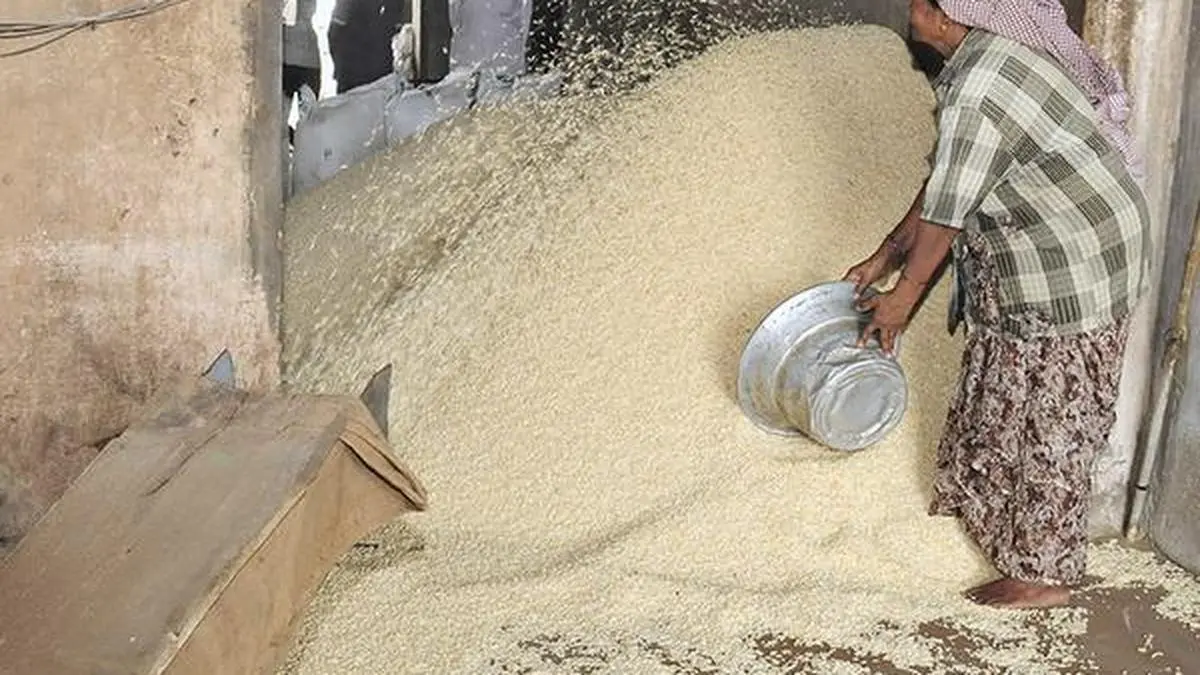
Kharif procurement, the process of buying crops from farmers at a minimum support price (MSP), has come to an end in the state of Assam. The state government has announced the completion of purchases for the season, which has left them with a surplus stock of crops. With the government now under pressure to liquidate these stocks, it is important to examine the impact of this surplus and the steps being taken to address it.
Kharif season, also known as the monsoon season, is an important time for farmers in Assam as it is when they harvest their crops. This year, the state government set an MSP for various crops, including paddy, maize, and pulses, to ensure that farmers get a fair price for their produce. The government also initiated a procurement drive to buy crops directly from farmers, in order to support them and stabilize market prices.
The procurement drive was successful, with the government purchasing over 8 lakh tonnes of paddy and 3 lakh tonnes of maize from farmers across the state. This not only provided a steady income for the farmers but also helped in maintaining the market prices of these crops. However, with the procurement season coming to an end, the government is now facing the challenge of managing the surplus stock.
One of the major concerns is the financial burden that the surplus stock will put on the state exchequer. The government had allocated a budget of Rs. 4,400 crore for the procurement of crops, but with the surplus stock, this amount is expected to increase substantially. This could potentially strain the finances of the state and affect other development projects.
To address this issue, the government is exploring various options to liquidate the surplus stock. One of the options being considered is the export of these crops to other states or countries. This not only provides a solution for the surplus but also opens up new markets for Assam’s agricultural produce. The government is also looking into the possibility of utilizing the surplus stock for various welfare schemes, such as the Public Distribution System (PDS) and mid-day meal programs.
Another concern is the storage of the surplus stock. The state government has already made arrangements for temporary storage facilities, but this is not a sustainable solution. Therefore, the government is also exploring long-term options, such as setting up warehouses and cold storage facilities, to ensure that the surplus stock can be stored safely and utilized as needed.
Despite these challenges, the surplus stock of crops can also be seen as an opportunity for Assam. The state has a rich agricultural sector and the surplus stock can be utilized to boost the economy and create new avenues for employment. By exploring various options for utilization, the government can not only manage the surplus stock but also promote the growth of the agricultural sector.
It is also important to note that the successful procurement of crops in the state is a testament to the government’s commitment towards the welfare of farmers. The MSP and procurement process have provided much-needed support to the farmers during these difficult times. It has also encouraged them to continue farming and contribute to the growth of the agricultural sector.
In conclusion, the completion of Kharif procurement in Assam marks the end of a successful season for farmers. However, the surplus stock of crops presents a new challenge for the state government. With careful planning and utilization, this surplus can be turned into an opportunity for the growth of Assam’s agricultural sector. It is now up to the government to take proactive steps and ensure that the surplus stock is managed efficiently and effectively.