
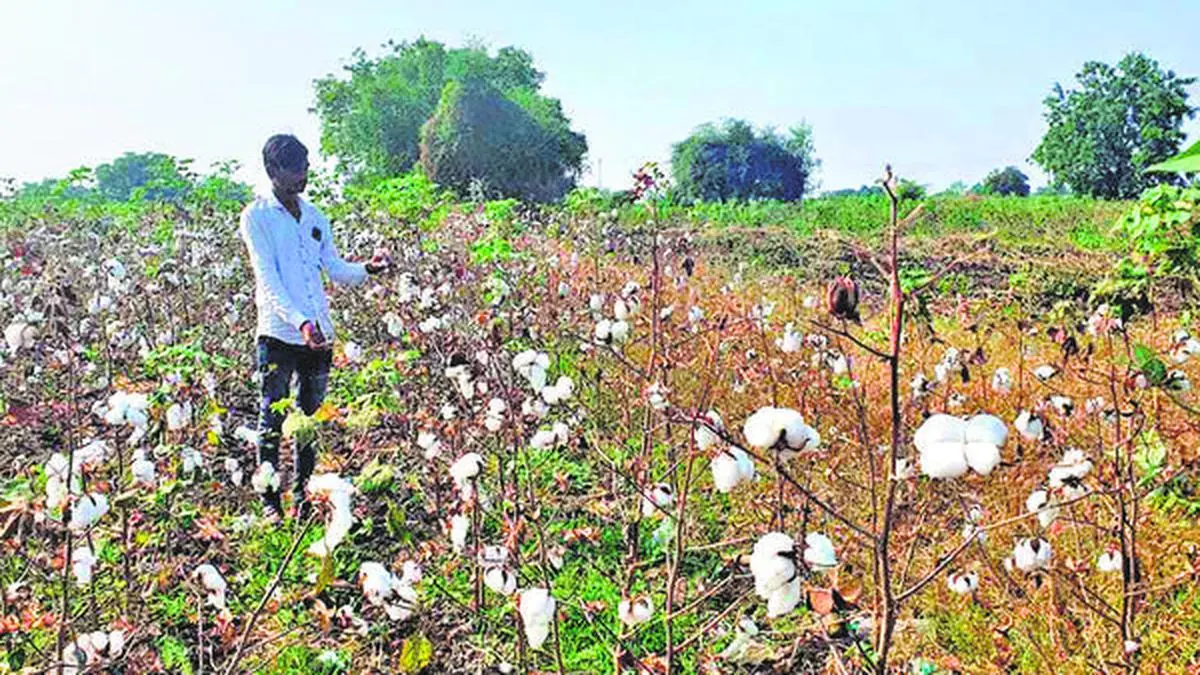
The state of Telangana, known for its rich agricultural land and bountiful crops, has been experiencing a setback due to deficient rain. This has greatly affected the coverage of crops, causing concern among farmers and the agricultural community. However, amidst this challenging situation, there is a glimmer of hope as some farmers are considering shifting to groundnut cultivation in the neighboring state of Gujarat.
The monsoon season, which is crucial for the growth of crops, has been below average in Telangana this year. The state has received only 65% of its expected rainfall, leading to a decline in the sowing of crops such as paddy, maize, and soybean. This has left farmers worried about their livelihood and the well-being of their families.
The state government has been taking measures to mitigate the effects of the deficient rain. The Chief Minister, K. Chandrashekar Rao, has announced a relief package of Rs. 6,000 crore for farmers who have been affected by the drought-like situation. The government has also directed the agriculture department to provide necessary support and guidance to farmers on alternate crops that can be grown in such conditions.
One such alternate crop that has caught the attention of farmers is groundnut. Known for its resilience to dry weather and high nutritional value, groundnut has been a popular choice for farmers in Gujarat. With the state receiving good rainfall this year, the groundnut crop is expected to yield a good harvest. This has led to many farmers in Telangana considering shifting to groundnut cultivation in Gujarat.
The shift to groundnut cultivation not only promises a better yield but also opens up new opportunities for farmers. The groundnut market in Gujarat is well-established and offers good returns for farmers. This can help them overcome the losses incurred due to deficient rain in Telangana. Moreover, groundnut is a highly versatile crop and can be used for various purposes such as oil extraction, animal feed, and even as a snack. This provides farmers with multiple options to earn a livelihood from their crops.
The decision to shift to groundnut cultivation has not been an easy one for the farmers. Many have been cultivating traditional crops for generations and are hesitant to change their practices. However, with the guidance and support of the government and experts, they are willing to take the risk and explore new opportunities.
The shift to groundnut cultivation is not only beneficial for the farmers but also for the agricultural sector as a whole. It will bring diversity to the crops grown in the state and reduce the dependence on a few specific crops. This will help in improving the overall productivity and sustainability of the agricultural sector in Telangana.
The state government is also taking steps to promote groundnut cultivation among farmers. They have been conducting awareness campaigns and providing training to farmers on the cultivation techniques of groundnut. This will help in ensuring a smooth transition for the farmers and ensure that they are equipped with the necessary knowledge and skills to grow groundnut successfully.
The move to shift to groundnut cultivation by some farmers in Telangana is a positive step towards overcoming the challenges posed by deficient rain. It not only provides a solution to the current situation but also opens up new opportunities for farmers. With the support of the government and the determination of farmers, this shift has the potential to bring about a positive change in the agricultural sector of Telangana.
In conclusion, while the deficient rain has affected the coverage of crops in Telangana, the decision of some farmers to shift to groundnut cultivation in Gujarat brings hope and optimism. It is a testament to the resilience and adaptability of our farmers, and with the right support and guidance, they can overcome any challenge. Let us continue to support and encourage our farmers as they strive to provide us with the food that sustains us.