
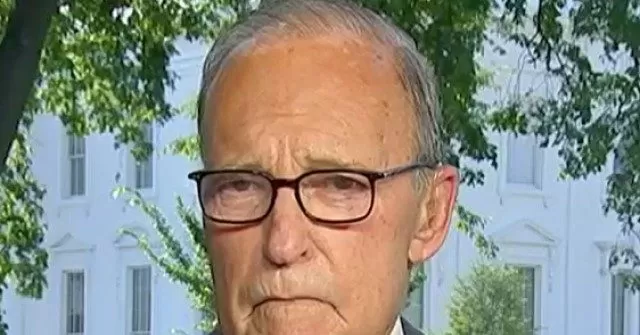
In a recent episode of Fox Business Network’s “Kudlow,” host Larry Kudlow discussed the Federal Reserve’s stance on tariffs and inflation, calling it a “groupthink” mentality. Kudlow, a renowned economic analyst and former advisor to President Trump, expressed his concerns about the Fed’s approach and its potential impact on the economy.
Kudlow began by referencing an article by Breitbart’s John Carney, which described the Fed’s actions as a “war against tariffs.” He noted that unlike a traditional war, this battle is being fought on an economic front, with the Fed using its monetary policies as weapons. Kudlow then delved into the dangers of groupthink within any organization, especially in a bureaucratic setting like the Federal Reserve.
Groupthink, as Kudlow explained, is a phenomenon where individuals within a group tend to conform to the group’s dominant ideas and beliefs, even if they may not necessarily agree with them. This can lead to a narrow-minded approach and a lack of critical thinking, which can have serious consequences, particularly in the case of economic policies.
Kudlow argued that the Fed’s groupthink mentality has led them to ignore the potential benefits of tariffs, such as protecting American industries and jobs, and solely focus on the negative effects they may have on inflation. He also pointed out that the Fed’s actions may be influenced by their desire to maintain their independence from the government, rather than making decisions based on what’s best for the economy.
Kudlow’s concerns are not unfounded. The Fed’s recent decision to raise interest rates has been met with criticism from President Trump, who believes that the move could harm the economy and hinder his efforts to boost economic growth. Kudlow echoed these sentiments, stating that the Fed’s actions could potentially slow down the economy and hurt American businesses and workers.
Kudlow’s remarks serve as a reminder that diversity of thought and open-mindedness are crucial in decision-making, especially when it comes to economic policies. He urged the Fed to consider all factors before making decisions and not fall prey to groupthink, which could have severe consequences for the American economy.
The Federal Reserve plays a critical role in shaping the country’s economic landscape, and as such, it is essential for its members to have a well-rounded and unbiased approach. Kudlow’s criticism of the Fed’s groupthink mentality is a call to action for the organization to reevaluate its policies and consider all perspectives before making crucial decisions.
In conclusion, Larry Kudlow’s discussion on the Federal Reserve’s groupthink mentality sheds light on the dangers of conforming to a dominant ideology, especially in a bureaucratic setting. His remarks serve as a wake-up call for the Fed to reevaluate its approach and consider all aspects before making decisions that could have a significant impact on the economy. It is essential for the Fed to maintain its independence while also keeping the best interests of the American people in mind. As Kudlow aptly stated, “Groupthink is a bureaucratic disease that must be cured for the sake of the economy and the American people.”