
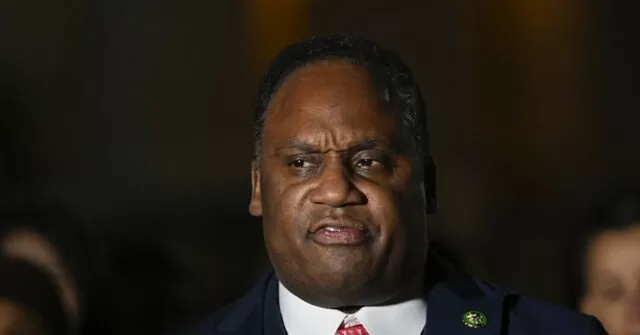
In a recent announcement, the State Department revealed that it will now be reviewing the social media accounts of applicants for student visas. This decision has sparked controversy and raised concerns among many, including Democratic Representative Jonathan Jackson from Illinois.
During an interview on MSNBC’s “Way Too Early” show, Rep. Jackson expressed his views on the new guidelines, stating that they are “too subjective” and also need to be broader. He believes that the State Department’s decision to review social media accounts of visa applicants is a step in the right direction, but it needs to be done in a more objective and comprehensive manner.
The State Department’s decision comes after a series of high-profile cases where individuals with extremist views were granted visas to enter the United States. This raised questions about the effectiveness of the current vetting process and the need for additional measures to ensure the safety and security of the country.
However, Rep. Jackson believes that the guidelines for reviewing social media accounts are too vague and open to interpretation. He argues that this could lead to discrimination and unfair treatment of certain individuals based on their social media activity. He also points out that the guidelines need to be broader and include other factors such as criminal records and past travel history.
The State Department has stated that the purpose of reviewing social media accounts is to identify potential security threats and prevent individuals with extremist views from entering the country. However, Rep. Jackson believes that this approach is not enough and more needs to be done to ensure the safety of the American people.
He suggests that the State Department should work closely with other agencies and organizations to gather more information about visa applicants. This could include conducting interviews, background checks, and consulting with local authorities in the applicant’s home country. By doing so, the State Department can get a more comprehensive understanding of an individual’s background and potential risks.
Rep. Jackson also emphasizes the need for a fair and unbiased vetting process. He believes that the guidelines should be applied equally to all applicants, regardless of their race, religion, or nationality. This will not only ensure the safety of the country but also uphold the values of equality and fairness that the United States stands for.
In addition to the concerns about subjectivity and fairness, Rep. Jackson also raises the issue of the potential impact on international students. He believes that the new guidelines could discourage students from applying to study in the United States, which could have a negative impact on the country’s education system and economy.
International students contribute significantly to the diversity and academic excellence of American universities. They also bring in billions of dollars to the economy through tuition fees and living expenses. Rep. Jackson believes that the State Department should take this into consideration and ensure that the new guidelines do not discourage students from pursuing their education in the United States.
In conclusion, while Rep. Jackson supports the State Department’s decision to review social media accounts of visa applicants, he believes that the guidelines need to be more objective and comprehensive. He also stresses the importance of a fair and unbiased vetting process and the need to consider the impact on international students. With these measures in place, the United States can continue to welcome students from all over the world while ensuring the safety and security of its citizens.