
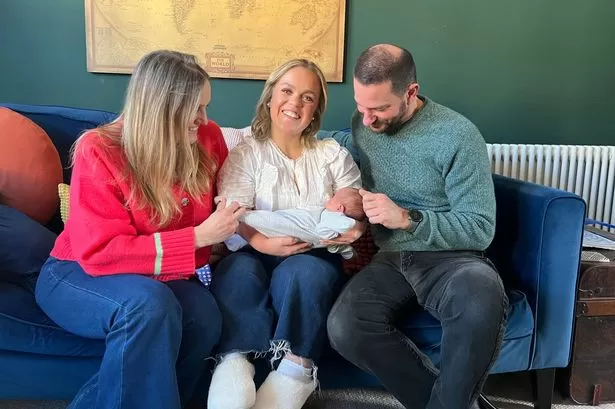
Team GB swimmer, Jazz Carlin, has made waves in the swimming world with her impressive performances and determination. But behind her success lies a story of adoption and the question of whether or not she wants biological children. In her new ITV documentary, Jazz opens up about her personal journey and sheds light on the complexities of adoption and the pressure to have biological children.
Born in Swansea, Wales, Jazz was adopted at just 15 months old by her loving parents, Paul and Lynn Carlin. Growing up, she always knew she was adopted and was grateful for the love and support her parents provided. However, as she got older, Jazz couldn’t help but wonder about her biological family and the impact of adoption on her life.
In the documentary, Jazz travels to South Africa, where she was born, to meet her biological mother for the first time. It is an emotional and eye-opening experience for Jazz, as she learns about her biological family and the circumstances that led to her adoption. She also discovers that she has a biological brother who was also adopted, adding another layer to her story.
Through this journey, Jazz reflects on her own identity and the impact of adoption on her life. She shares her struggles with feeling like she didn’t belong and the constant questions about her biological family. But she also acknowledges the love and support she received from her adoptive family and how they shaped her into the person she is today.
One of the most poignant moments in the documentary is when Jazz visits an orphanage in South Africa. As she interacts with the children, she realizes that her life could have taken a very different path if she had not been adopted. This experience further solidifies her gratitude for her adoptive family and the opportunities they have given her.
But the documentary also delves into the pressure Jazz feels to have biological children. As a successful athlete, she is constantly asked about her plans for starting a family. But for Jazz, the decision is not as simple as it may seem. She shares her fears and concerns about passing on her genetic condition, Marfan syndrome, to her children.
Marfan syndrome is a genetic disorder that affects the body’s connective tissue and can lead to serious health complications. Jazz’s father also has the condition, and she has seen firsthand the impact it can have on a person’s life. This has made her question whether she wants to take the risk of passing it on to her children.
In the documentary, Jazz consults with medical professionals and undergoes genetic testing to better understand her options. She also speaks with other athletes who have Marfan syndrome and how they have navigated the decision to have children. It is a deeply personal and emotional journey for Jazz, but one that ultimately leads her to make a decision that is right for her.
Jazz’s documentary is a powerful and honest exploration of adoption, identity, and the pressure to have biological children. It sheds light on the complexities and challenges that come with these topics and encourages viewers to have open and honest conversations about them.
Through her story, Jazz also sends a message of hope and resilience. Despite the challenges she has faced, she has not let them define her or hold her back from achieving her dreams. She is a testament to the power of determination and the love and support of family.
As a Team GB swimmer, Jazz has already made her mark in the world of sports. But with this documentary, she is making an impact beyond the pool. She is using her platform to raise awareness about adoption and genetic conditions, and to inspire others to embrace their own unique journeys.
Jazz’s story is a reminder that family is not just about blood, but about love, support, and the bonds we create with those around us. It is a reminder to be grateful for the opportunities we have been given and to never let our struggles define us. And most importantly, it is a reminder to have open and honest conversations about adoption and the pressure to have biological children, and to support and respect the decisions of others.