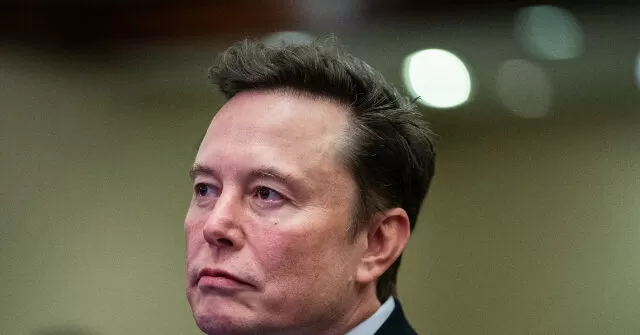
The Wisconsin Supreme Court has made a decision to reject a lawsuit filed by Wisconsin Attorney General Josh Kaul (D) to stop Elon Musk from giving $1 million payments to two individuals at his town hall event on Sunday evening. This decision has been met with mixed reactions, with some praising the court’s decision while others are disappointed.
The lawsuit was filed by Attorney General Kaul in an attempt to prevent Elon Musk, the CEO of Tesla and SpaceX, from giving away $1 million to two lucky individuals at his town hall event. The event, which was held in Wisconsin, was part of Musk’s efforts to promote his new company, Neuralink, which focuses on developing brain-computer interface technology.
According to the lawsuit, Attorney General Kaul argued that the $1 million payments were a form of illegal gambling and that Musk did not have the necessary permits to conduct such an activity. However, the Wisconsin Supreme Court rejected this argument and refused to hear the case, stating that there was no evidence to suggest that the payments were a form of gambling.
This decision has been met with praise from Musk’s supporters, who see it as a victory for innovation and entrepreneurship. They argue that Musk’s town hall event was a unique and creative way to promote his new company and that the $1 million payments were simply a way to generate excitement and interest in the event.
On the other hand, some critics have expressed disappointment with the court’s decision, stating that it sets a dangerous precedent for future events and activities. They argue that if Musk is allowed to give away $1 million without the necessary permits, it could open the door for other individuals and companies to do the same, potentially leading to illegal and unethical practices.
Despite the mixed reactions, one thing is clear – Elon Musk’s town hall event was a huge success. The event was attended by thousands of people, both in person and online, and it generated a lot of buzz and excitement. This is not surprising, considering Musk’s track record of pushing the boundaries and revolutionizing industries.
Musk’s new company, Neuralink, has the potential to change the way we interact with technology and could have a significant impact on the future of humanity. The $1 million payments were a way to generate interest and support for this groundbreaking technology, and it seems to have worked.
In addition to the $1 million payments, Musk also announced that Neuralink would be investing $100 million in Wisconsin to build a new facility. This news has been welcomed by the state, as it will bring new jobs and opportunities to the area.
Overall, the Wisconsin Supreme Court’s decision to reject the lawsuit filed by Attorney General Kaul is a win for innovation and progress. It sends a message that the state is open to new ideas and is willing to support companies like Neuralink that are pushing the boundaries and driving change.
As for the $1 million payments, they were simply a way to generate excitement and support for a new and exciting technology. It was not a form of gambling, as some critics have suggested, but rather a creative and unique way to promote an event and a company.
In conclusion, the Wisconsin Supreme Court’s decision to reject the lawsuit filed by Attorney General Kaul is a positive step towards promoting innovation and progress in the state. It shows that Wisconsin is open to new ideas and is willing to support companies like Neuralink that are pushing the boundaries and driving change. The $1 million payments were a successful way to generate excitement and support for a groundbreaking technology, and we can only imagine what the future holds for Neuralink and its impact on the world.