
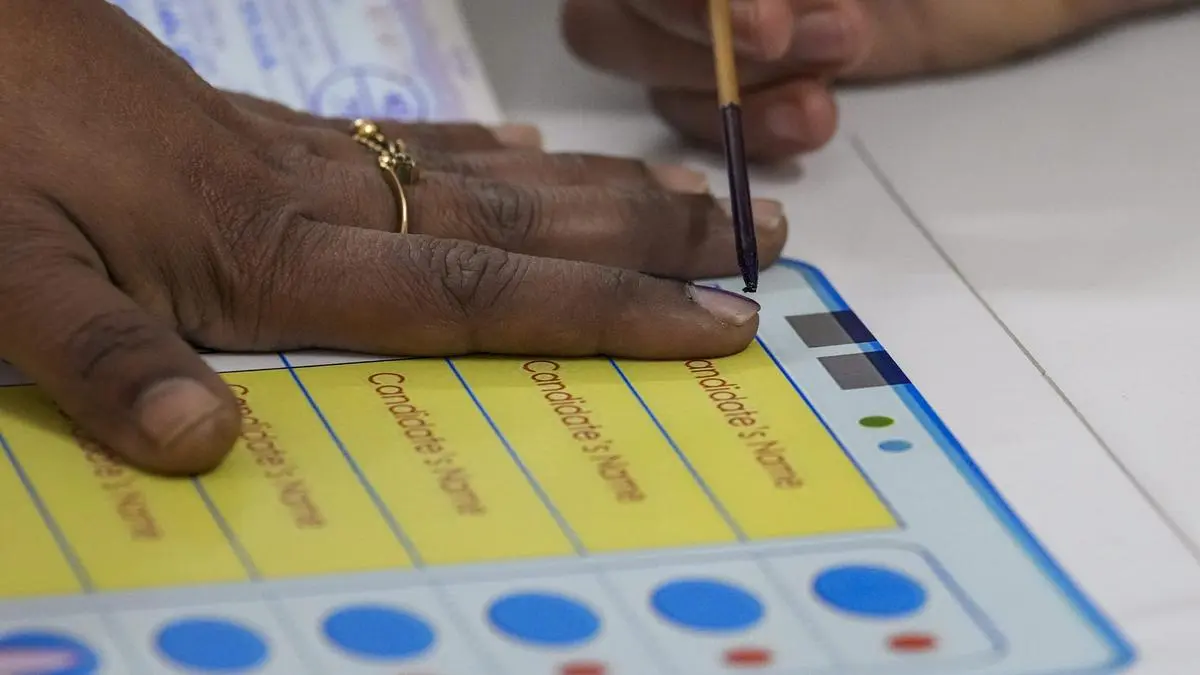
In a democratic country like India, the Election Commission of India (ECI) plays a crucial role in ensuring free and fair elections. As part of its responsibilities, the ECI has mandated that all registered political parties submit compliance reports to the Chief Electoral Officers (CEOs) of states or the ECI itself. However, recent reports have shown that a majority of the Registered Unrecognized Political Parties (RUPPs) have failed to fulfill this requirement.
According to the ECI, there are currently over 2,300 registered political parties in India, out of which only around 200 are recognized by the ECI. The remaining parties fall under the category of RUPPs. These parties are required to submit compliance reports to the CEOs of states or the ECI, which include details of their income and expenditure, donations received, and assets and liabilities.
However, a recent study conducted by a non-governmental organization (NGO) has revealed that a majority of the RUPPs have not submitted their compliance reports. The study, which analyzed data from the ECI’s website, found that only 20% of the RUPPs have submitted their reports to the CEOs of states or the ECI. This is a cause for concern as it raises questions about the transparency and accountability of these political parties.
One of the main reasons for this non-compliance is the lack of awareness among RUPPs about the requirement to submit compliance reports. Unlike recognized political parties, RUPPs do not have a significant presence or resources to educate themselves about the rules and regulations set by the ECI. As a result, many of them are unaware of their obligations and do not submit their reports on time.
Another reason for this non-compliance is the lack of consequences for not adhering to the ECI’s rules. While recognized political parties face strict penalties for not submitting their compliance reports, RUPPs do not face any such consequences. This has led to a lack of motivation among these parties to fulfill their obligations.
Moreover, the process of submitting compliance reports is often seen as cumbersome and time-consuming by RUPPs. They have to collect and organize all the necessary information, fill out the required forms, and submit them to the CEOs of states or the ECI. This can be a daunting task for small and unrecognized parties with limited resources and manpower.
The ECI has taken note of this issue and has been making efforts to increase awareness among RUPPs about the requirement to submit compliance reports. It has also introduced online submission of reports to make the process more convenient and efficient. However, these efforts have not yielded significant results so far.
It is essential for RUPPs to understand that submitting compliance reports is not just a legal requirement but also a moral responsibility. These reports provide transparency and accountability to the public and help in maintaining the integrity of the electoral process. By not submitting their reports, RUPPs are not only violating the law but also betraying the trust of the people who have supported them.
The ECI must also take stricter measures to ensure compliance from RUPPs. It can consider imposing penalties or even de-registering parties that repeatedly fail to submit their reports. This will send a strong message to RUPPs and motivate them to fulfill their obligations.
In conclusion, the non-compliance of RUPPs in submitting their compliance reports is a matter of concern and needs to be addressed urgently. The ECI and the government must work together to increase awareness and enforce stricter measures to ensure that all registered political parties, including RUPPs, fulfill their obligations. Only then can we truly achieve a transparent and accountable electoral system in our country.